
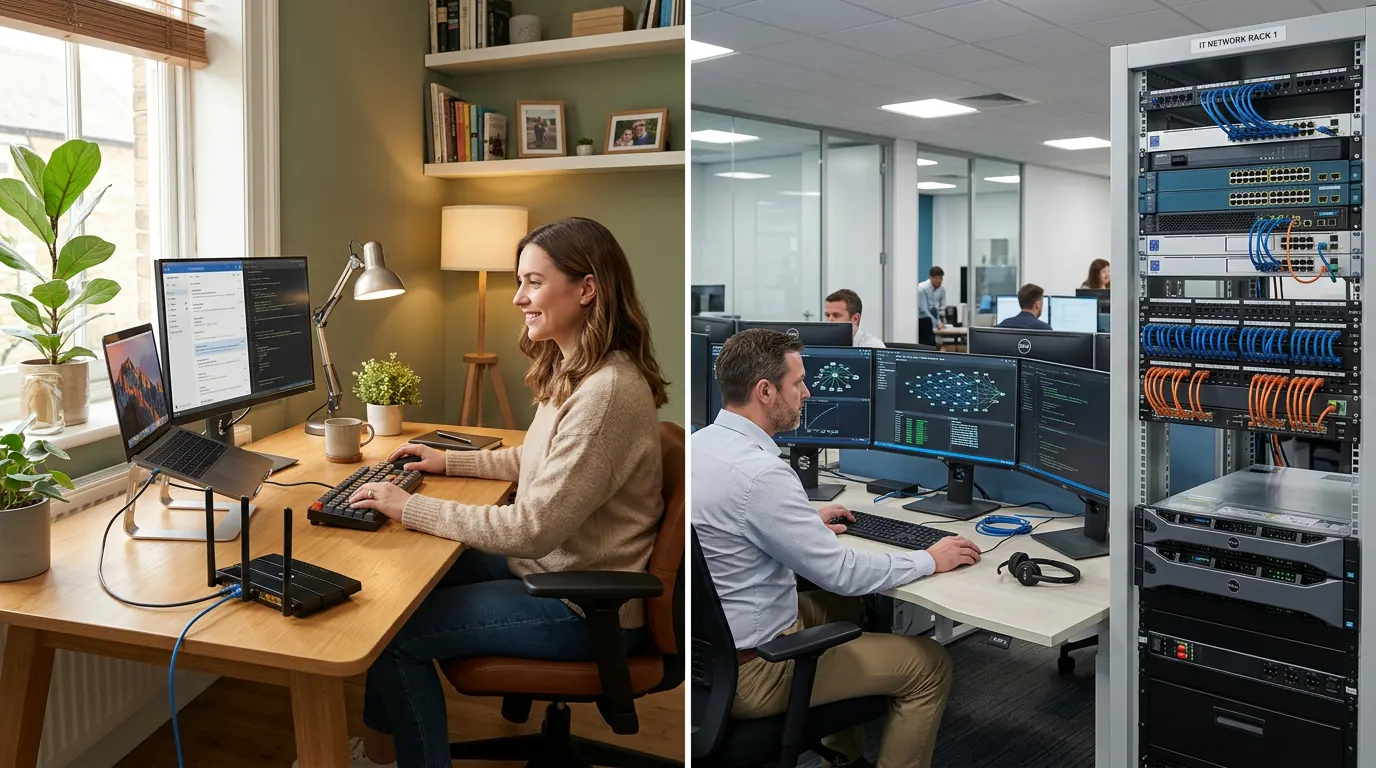
Lots of small businesses start on a home fibre line: same connection you use for streaming and browsing. It’s cheap and often enough at first. But as you rely on the internet for orders, video calls, and cloud tools, the gaps between home and business packages can matter — support, uptime, and sometimes speed or features.
This article explains the main differences and when upgrading to business internet is worth it.
Support and response times
Home packages usually have standard support: you log a fault and wait in the queue. Business packages typically offer prioritised support and sometimes a dedicated account manager or faster response targets. If your business can’t afford to be offline for a day or two, business support can be the main reason to upgrade.
Uptime and service-level agreements
Business plans often come with an SLA (service-level agreement): a commitment to a certain level of uptime and possibly compensation if the provider doesn’t meet it. Home lines rarely offer that. If downtime costs you money or reputation, an SLA gives you something to fall back on.
Speed and symmetry
Home fibre is often asymmetric: faster download than upload. For most home use that’s fine. Businesses that upload large files, run video calls, or use cloud backups may benefit from higher upload or symmetric speeds. Business packages sometimes offer better upload or more consistent performance during peak times.
Static IP and other features
Many home lines use a dynamic IP that can change. If you need to host a server, run certain security systems, or use remote access by IP, you may need a static IP — usually an add-on or included in business plans. Business packages may also include options like multiple IPs or different routing.
When to stay on home vs upgrade
If you’re a solo operator, work from home occasionally, and can tolerate a few hours offline now and then, a home line may be enough. Upgrade when: you have staff or clients depending on your connection, you run critical systems over the internet, you need faster support or an SLA, or you need a static IP or other business-only features. The cost difference is often justified by reduced risk and better support.
Frequently asked questions
Can I use my home fibre for my business?
Yes — many small businesses do. Check your provider’s terms; some allow “light” business use on a home line. If you rely on the connection for income, consider a business package for better support and peace of mind.
How much more does business internet cost?
It varies by provider and speed. Business packages are often a few hundred rand more per month than equivalent home plans. Compare the exact packages and support levels for your area.
Do I need business fibre if I work from home?
Not always. If you’re the only user and occasional outages are acceptable, home may be fine. If you’re on video calls all day, use cloud apps for core work, or run a small team from home, business fibre with better support can be worth it.
Home internet can work for a small business until reliability and support become critical. When they do, upgrading to a business package usually means better support, clearer SLAs, and options like static IPs. Need help choosing a business connection? View our internet services or contact us.