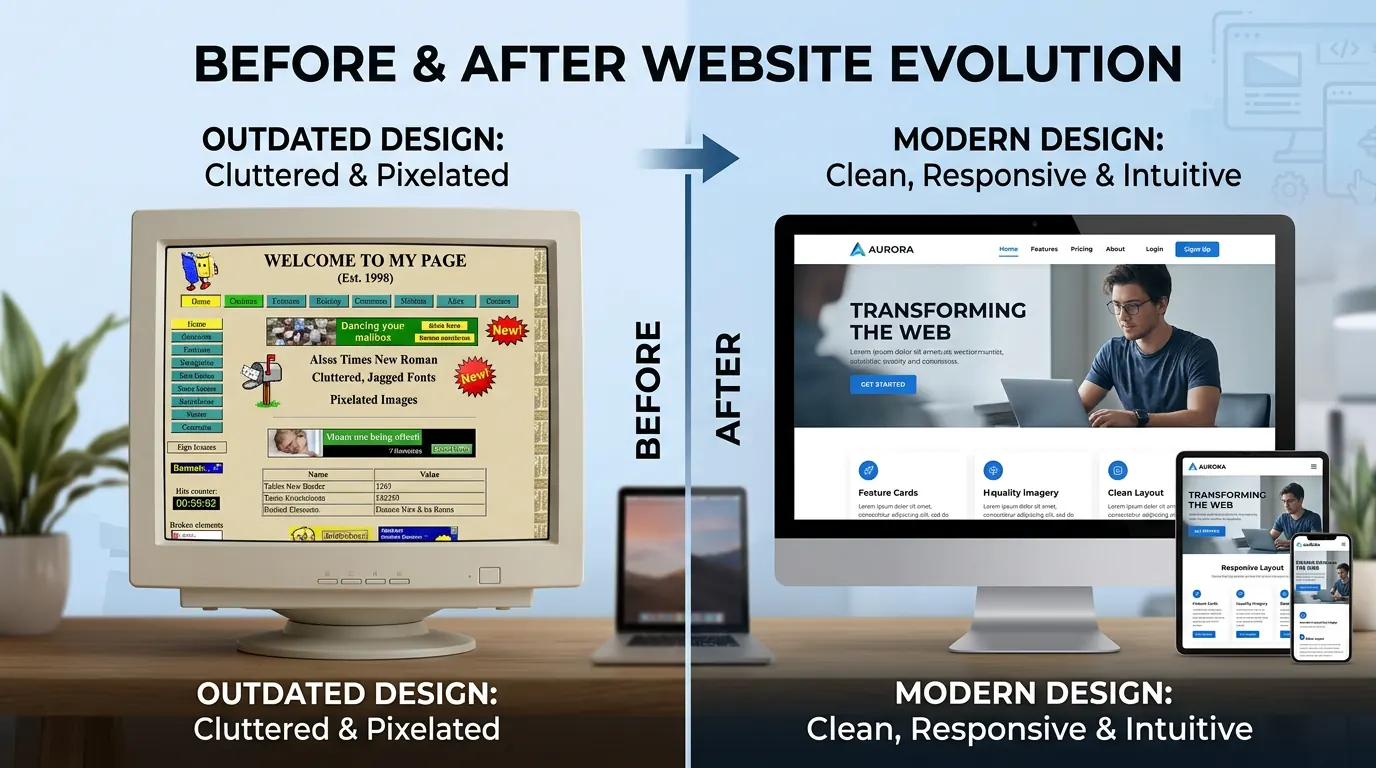
Your website might have worked well a few years ago, but if it’s slow, hard to use on a phone, or no longer reflects your business, it could be costing you customers. Sometimes a few tweaks are enough; other times a full redesign is the right move.
Here are seven warning signs that it’s time to consider a redesign — and what to do next.
1. Your site is slow to load
Visitors abandon sites that take more than a few seconds to load, and Google uses speed as a ranking factor. If your pages feel sluggish on mobile or desktop, or PageSpeed Insights shows poor scores, speed is hurting you. Often the fix is better hosting, image optimisation, and lighter code — but if the site is old and bloated, a rebuild can be the cleanest solution.
2. It doesn’t work well on mobile
Google ranks the mobile version of your site first. If your site is hard to read or use on a phone — tiny text, horizontal scrolling, buttons too small to tap — you’re losing traffic and credibility. A responsive redesign ensures one site that works on all devices.
3. The design looks outdated
Dated fonts, cluttered layouts, or an old-fashioned look can make your business seem behind the times. You don’t need to chase every trend, but a clean, modern layout builds trust. A refresh can align your site with how your business looks today.
4. You can’t update it easily
If you have to call a developer for every small change, or the backend is confusing and fragile, you’re stuck. A redesign on a modern platform (e.g. WordPress) with a clear content structure lets you or your team update text, images, and pages without constant technical help.
5. Your branding or offer has changed
Rebrand, new services, or a different focus should be reflected online. If your site still talks about old products or an old look, visitors get mixed messages. A redesign is a chance to align the site with your current brand and messaging.
6. Security or technical debt is a concern
Old themes, abandoned plugins, or an unsupported platform can be security risks. If you’re constantly patching or worrying about hacks, moving to a supported, well-maintained setup as part of a redesign reduces risk and stress.
7. You’re not getting leads or enquiries
If traffic is okay but nobody contacts you or converts, the problem may be the site: unclear messaging, weak calls-to-action, or a confusing journey. A redesign focused on clarity, trust, and clear next steps can improve enquiries and conversions.
Frequently asked questions
Redesign vs refresh — what’s the difference?
A refresh updates look and feel (colours, fonts, images, maybe layout) on the same structure. A redesign rebuilds the site — new structure, content, and often platform — for better speed, mobile experience, and usability. Choose based on how many of the seven signs apply.
How long does a website redesign take?
It depends on size and complexity. A small business site might take a few weeks from brief to launch; a larger site with many pages or eCommerce can take longer. Your provider should give you a timeline and milestones.
Will a redesign hurt my SEO?
Done properly, no. Keep the same URLs (or set up proper redirects), preserve important content and structure, and improve speed and mobile experience. That usually helps SEO. Work with someone who understands SEO so nothing is lost in the move.
If several of these signs apply, it’s worth getting a professional opinion. At Strand Web we design and host sites for businesses across the Western Cape — from our Standard Website Package to our Premium eCommerce site, the initial design is included in the monthly amount. A further redesign is quoted separately. View our website hosting packages or contact us to discuss your site.