
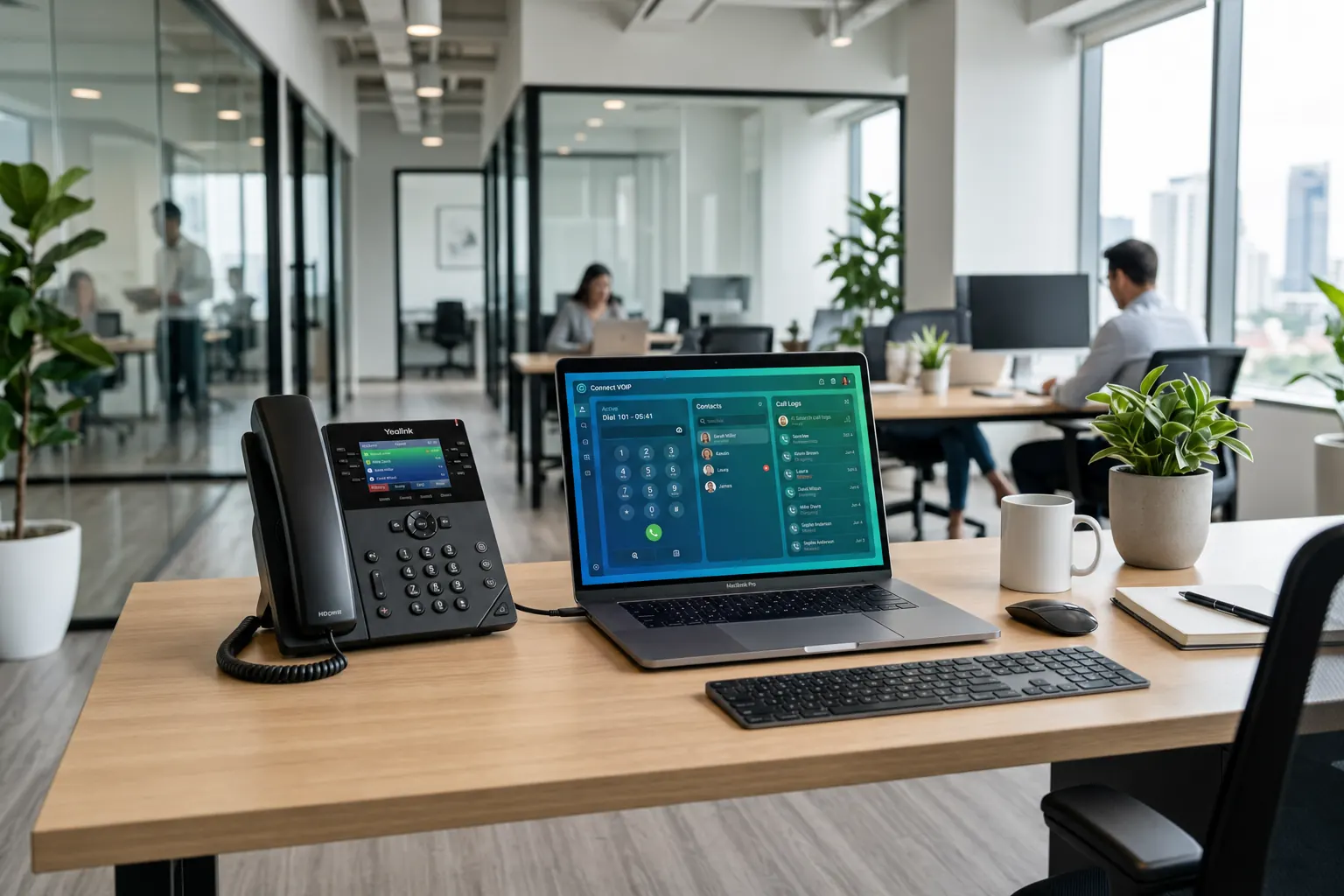
Traditional landlines are expensive and inflexible. VOIP (Voice over Internet Protocol) sends calls over your internet connection instead of the old phone network. For businesses, that usually means lower monthly costs, easier scaling (add lines or numbers without new wiring), and features like voicemail-to-email, hunt groups, and softphones on laptops and phones.
This article explains how VOIP works and why many businesses cut their phone bill significantly by switching.
How VOIP works
Your voice is converted into data and sent over the internet to your VOIP provider, who connects the call to the normal phone network (or to another VOIP user). You use either a physical VOIP phone (connected to your router), a softphone (app on your computer or smartphone), or both. You need a stable internet connection and a VOIP provider; no copper line required. You can often keep your existing number (porting) so customers don’t need to change.
What you save
Landline rentals and call charges from traditional providers add up. VOIP typically charges a low monthly fee per line or user and cheap (often inclusive) call rates. Many businesses see savings of 40–60% or more compared to a traditional business line, especially when adding extensions or multiple numbers. Exact savings depend on your current bill and usage; a provider can give you a comparison.
Features that help small businesses
VOIP systems usually include: voicemail (and often voicemail-to-email), call forwarding, hunt groups (ring several numbers), and caller ID. Many support softphones so you can take business calls on your laptop or mobile. That’s useful for remote work and for avoiding a separate desk phone. You can add lines or numbers as you grow without new physical lines.
What you need to switch
You need: broadband (fibre or stable LTE), a VOIP provider, and either VOIP handsets or softphone apps. If you want to keep your current number, your provider will arrange porting from Telkom (or another carrier); there may be a short transition. Once ported, you cancel the old line. We help businesses in the Western Cape with VOIP setup and support — view our VOIP services or contact us to discuss.
Frequently asked questions
Can I keep my existing phone number?
In most cases yes. Number porting moves your number from your current provider to your VOIP provider. The process can take a few days to a couple of weeks. Your VOIP provider will guide you and handle the port request.
What if my internet goes down?
VOIP depends on your internet connection. If the line drops, calls drop unless you have a backup (e.g. LTE) or call forwarding to a mobile. Many businesses use VOIP as primary and forward to mobile when needed, or have a backup connection.
Is VOIP call quality good?
On a stable internet connection, VOIP quality is typically as good as or better than a landline. Poor internet (congestion, high latency) can cause choppy or dropped calls. Ensure your connection is reliable before relying on VOIP for all calls.
VOIP can cut your business phone bill significantly while giving you a more flexible, feature-rich system. If you’re ready to explore switching, view our VOIP services or get in touch for a quote or advice.